
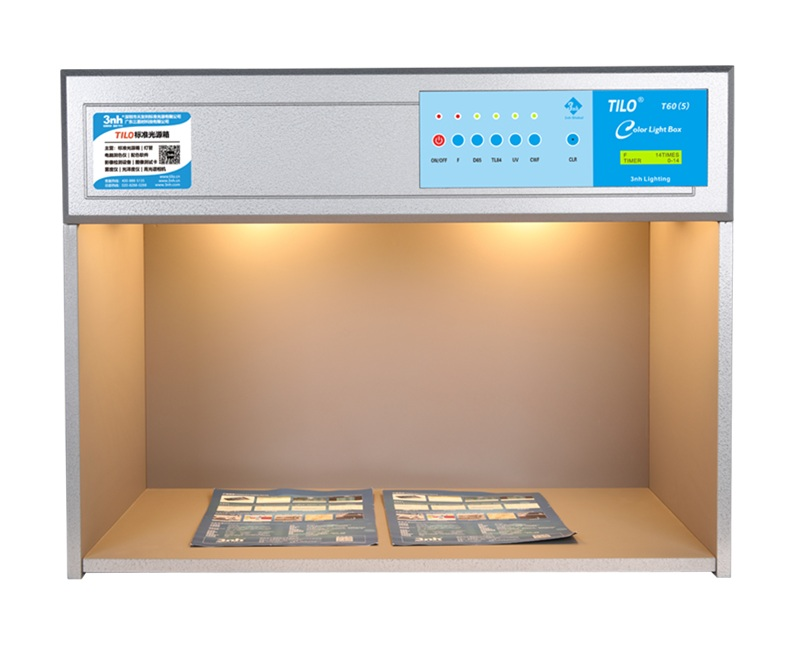
In industries where color accuracy is critical—such as textiles, plastics, printing, automotive, paints, and packaging—a small difference in lighting can create big inconsistencies. A product that looks “perfect” under office lighting may appear completely different under daylight or store lighting.
This is where a Color Assessment Cabinet (CAC) becomes an essential tool.
⭐ What Is a Color Assessment Cabinet?
A Color Assessment Cabinet is a standardized lightbox equipped with multiple light sources, designed to evaluate color consistency and detect metamerism. By switching between different lighting conditions, users can accurately assess whether two samples match in color, hue, and appearance.
💡 Why Accurate Lighting Matters
Human eyes perceive colors differently in different environments. For example:
- A fabric sample may match under daylight (D65) but not under warm store lighting (TL84).
- A plastic part may appear identical in the factory but different at the customer site.
- Ink prints may shift color when viewed under UV-rich light.
These discrepancies often lead to product rejections, customer complaints, or costly rework.
A Color Assessment Cabinet eliminates this problem by providing controlled, repeatable, and standardized lighting.
🔧 Key Light Sources in a Color Assessment Cabinet
Most CACs include a combination of the following:
- D65 (Daylight) – Standardized daylight illumination for color-critical tasks
- TL84 or F11 – Popular store/retail lighting
- CWF (Cool White Fluorescent) – Office environment lighting
- UV Light – Detects optical brighteners, security markings, fluorescence
- A or Incandescent Light – Home or warm lighting conditions
By switching among these light sources, you can determine whether color matches will hold true in real-world conditions.
🧪 What is Metamerism?
Metamerism occurs when two samples look identical under one light source but different under another.
The cabinet helps detect metamerism early, ensuring consistent quality before products reach customers.
🏭 Who Uses Color Assessment Cabinets?
This equipment is widely used in:
- Textiles & Apparel – Fabric, dye, yarn, garments
- Plastics & Injection Molding – Automotive parts, consumer goods
- Paints & Coatings – Color formulation, quality control
- Printing & Packaging – Ink color matching
- Cosmetics – Packaging, product shades
- Leather, Paper, Ceramics, and more
📝 Benefits of Using a Color Assessment Cabinet
✔️ Standardized & Repeatable Color Evaluation
Ensures color decisions are consistent, no matter who performs the test.
✔️ Minimizes Human Error
Controlled lighting reduces subjective color judgement.
✔️ Detects Color Variations Early
Avoids disputes and rework.
✔️ Supports International Standards
Most cabinets comply with ISO, ASTM, CIE, and DIN color assessment standards.
✔️ Helps Maintain Brand Identity
Critical for products where exact color defines brand recognition.
🛠️ How to Use a Color Assessment Cabinet (Best Practices)
- Ensure the cabinet is clean and neutral gray inside
- Place samples side by side—never overlapping
- Keep a consistent viewing angle (usually 45°)
- Check samples under each light source
- Limit viewing time to avoid color adaptation
- Record observations with the corresponding light source
📏 Compliance with Standards
Color Assessment Cabinets are commonly designed to meet:
- ISO 3664 – Graphic technology and photography
- ASTM D1729 – Color evaluation of nonmetallic materials
- CIE standards – Lighting classifications
- BS 950 – Color assessment in textiles
This ensures accurate and internationally accepted color matching procedures.
⭐ Conclusion
A Color Assessment Cabinet is one of the most essential quality-control tools for industries where color accuracy defines product quality. By providing controlled and standardized lighting, it helps detect metamerism, improves color consistency, reduces disputes, and ensures products look exactly as intended—under any lighting condition.
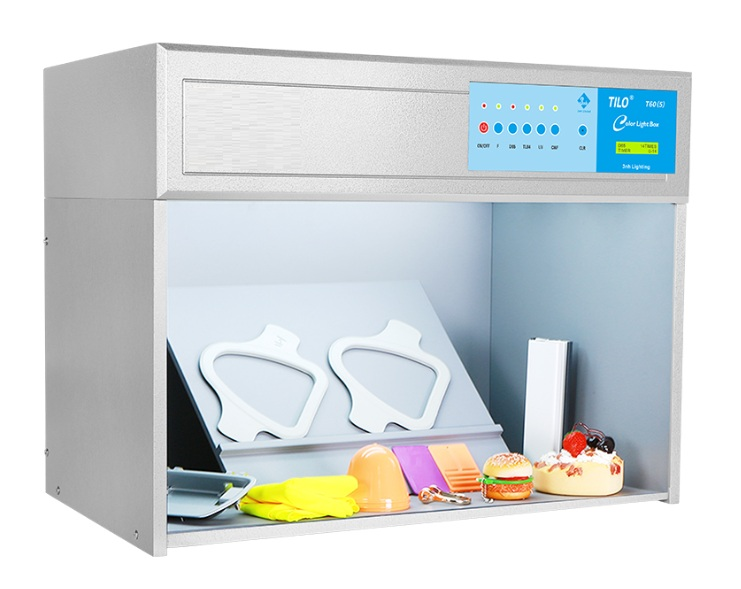
Color Assessment Cabinet
Professional Color Assessment Cabinet or Color Light Box with 4, 5, or 6 light sources for precise color evaluation. Ideal for textiles, plastics, paints, and packaging industries. Complies with ISO and ASTM standards.